Options for Composting in Chicago
Average Read Time: 6-8 minutes
Special thanks to Jim McCarthy (worm composter extraordinaire), Mel Haley, (fellow doula and composter), and BFEW for their help when writing this article!
Compost? What in the world does that have to do with birth?
I firmly believe in the interconnectedness of life. While my primary work as a doula is centered around perinatal education and support, I also recognize that there are other ways to support families that don’t require me to attend their birth!
Composting is one of those ways. There are so many community benefits to composting, including:
You’re returning nutrients and and organic material back to the soil, reducing the need for artificial fertilizers and pesticides. The less these are used in our world, the safer off our natural environment is for babies and their families to grow up in!
You’re reducing greenhouse gas emissions by not throwing food into a landfill - food waste accounts for 50% of all greenhouse gas emissions! Reducing greenhouse gas emissions helps lessen the impacts of climate change, so our planet will be around for our future generations.
You’re helping keep carbon in the soil. This helps protect our atmosphere, reducing the harms of skin disease for our babies and their families.
*Shockingly, these benefits were pulled from the EPA website. Check it out before it’s taken down!
These are just a few benefits of composting, the list truly goes on and on! So I wanted to provide my fellow Chicagoans with a short list of composting options they have around the city. This isn’t an exhaustive list, so if you have other ideas I could add, reach out to me here!
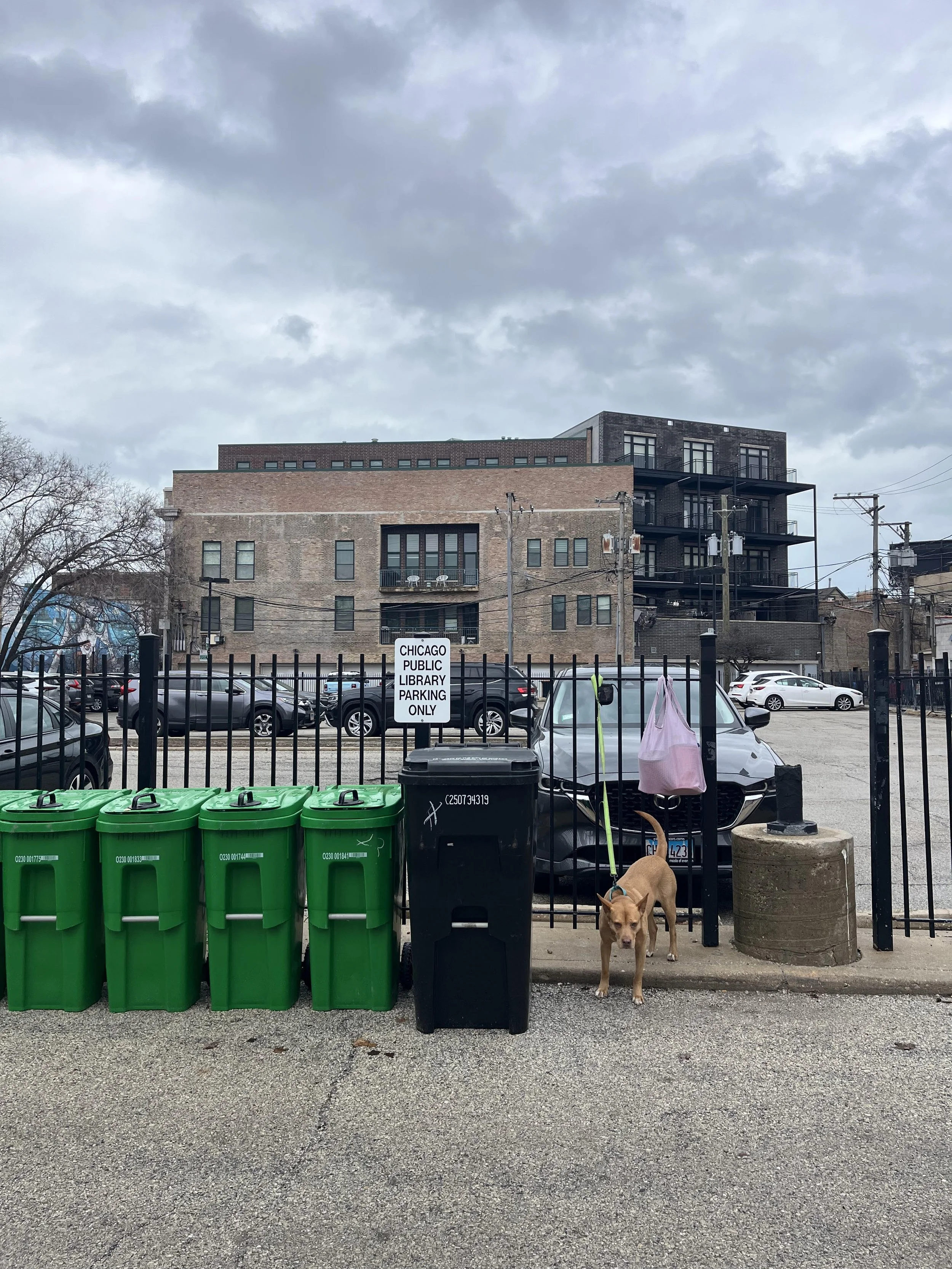
Pros: It's free! And the more people participate, the more bins around the city we will get, so access is growing! It can handle almost everything (bones, pits, oils, etc. are OK!) so there’s lots that you’re keeping out of the landfill.
Cons: You have to collect the compost and drop it off yourself. I freeze mine and make it a 0.5 mile walk to drop off once a week.
Notes: I do this one, so contact me if you want more information, tips, or have anything to share about your own experience! My trash is so much less smelly, and I don’t have to take it out that often because I get to compost so much!
2) Urban Canopy
Pros: They pick up for you! They also have tiered pricing, so you can choose what's best for you (price starts at $20/month for the smallest amount picked up)
Cons: Only one bucket, so if it's filled, you're done. You can pay extra for more pick ups.
Note: I used to do this one! They also have a fabulous CSA if you're interested!
3) Block Bins
Pros: Cheapest option is only $10 a month!
Cons: There may not be a bin close by. To counteract this, you can sponsor a bin near you and recruit your neighbors to compost with you!
Pros: Local pick up within most of Chicago. If they aren’t in your area, you can fill out a form to request a pick-up.
Cons: More expensive if you require more frequent pick-ups (pricing ranges from $18-40/month)
Notes: I see this van driving around the city daily, so it must be widely used!
5) In home compositing machines
Pros: No pick up or drop off to coordinate. Many machines create their own soil for you to then use with your own plants/garden!
Cons: The machines are really expensive, so it’s a big investment up front. Generally you can’t put in bones, oils, nut shells, stone fruit pits, cheese, etc. Some machines can be smelly, but there are tips and tricks to help counteract this!
Some brands that have been recommended to me by friends:
6) Worms!
Pros: Produces 1) a tea-like liquid - you dilute it with water and then can water plants with them and 2) worm casting - the dirt that worms produce that can be added to plants as well. Totally self-sustaining.
Cons: Can be smelly (one way to counteract that is to mix up the dirt every once in awhile to counteract the smell) and buggy (put a juice glass of vinegar and dish inside of the bin in a corner). You can’t put meat in with the worms. The worms also don’t like citrus or onions. Their ideal temperature is between 60-80 degrees, so you have to plan for where they are going to be stored in your home.
Notes:
Here’s a website for ordering compost-specific worms and resources online: Uncle Jim’s Worm Farm
The worms generally double in number every 60 days, so plan accordingly!
I hope you find this blog helpful as you start, rethink or continue your own composting journey! I’d love to hear how it’s going for you, so feel free to email me with anything! Connecting with my fellow Chicago community is something that brings me great joy <3