The Doula and the Partner
Average Read Time: 4-5 minutes
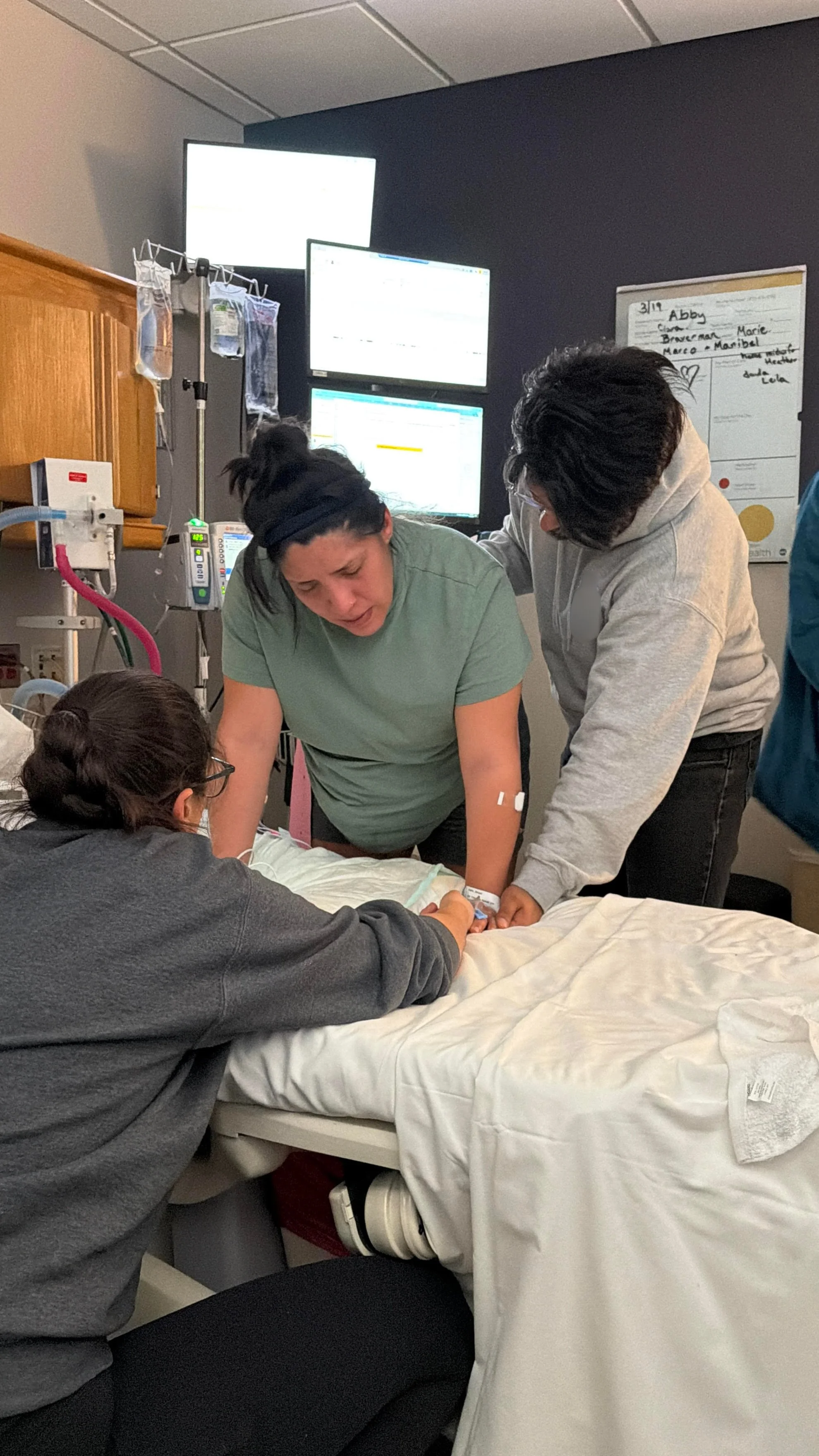
One question that comes up in almost every interview I have with potential clients is “how will you work with my partner?” And this is one of my favorite questions to answer, because there are so many ways that doulas and partners work together! There’s no competition in birth (nor in the rest of the world, even though capitalism would have you believe otherwise!), but sometimes it’s hard to visualize the role of a doula vs. the role of a partner. In this blog, I hope to dispel some rumors about doulas and partners, and give some tips to make the partnership the best it possibly can be.
Rumor: Doulas relegate partners to a corner, taking over the work that a partner “should” be doing.
Reality: I lean heavily on partners throughout the pregnancy and childbirth process! I am not an expert on the person having a baby - the partner is! They live together, make decisions together, and have decided to have a baby together! They know when the pregnant person is stressed, and what they need to cope with that stress. They know their favorite comfy pair of sweats, and the playlist they put on when they need to feel hyped. I know none of this! While I spent a lot of time getting to know the pregnant person in prenatals, there’s nothing like the knowledge that partners bring to the table.
The other reality is that much of the time, it’s their partners’ hands and physical support that a birthing person wants! They know the comforting head scratch that’s lulled them to sleep in the third trimester. They know the aches and pains in the pelvis that the pregnant person has been experiencing. And they are the touch that the birthing person knows and loves already! While I’m happy to do a back rub, hip squeeze, or foot massage, I try to defer to the partner for these tasks (unless the partner is already doing something else important!).
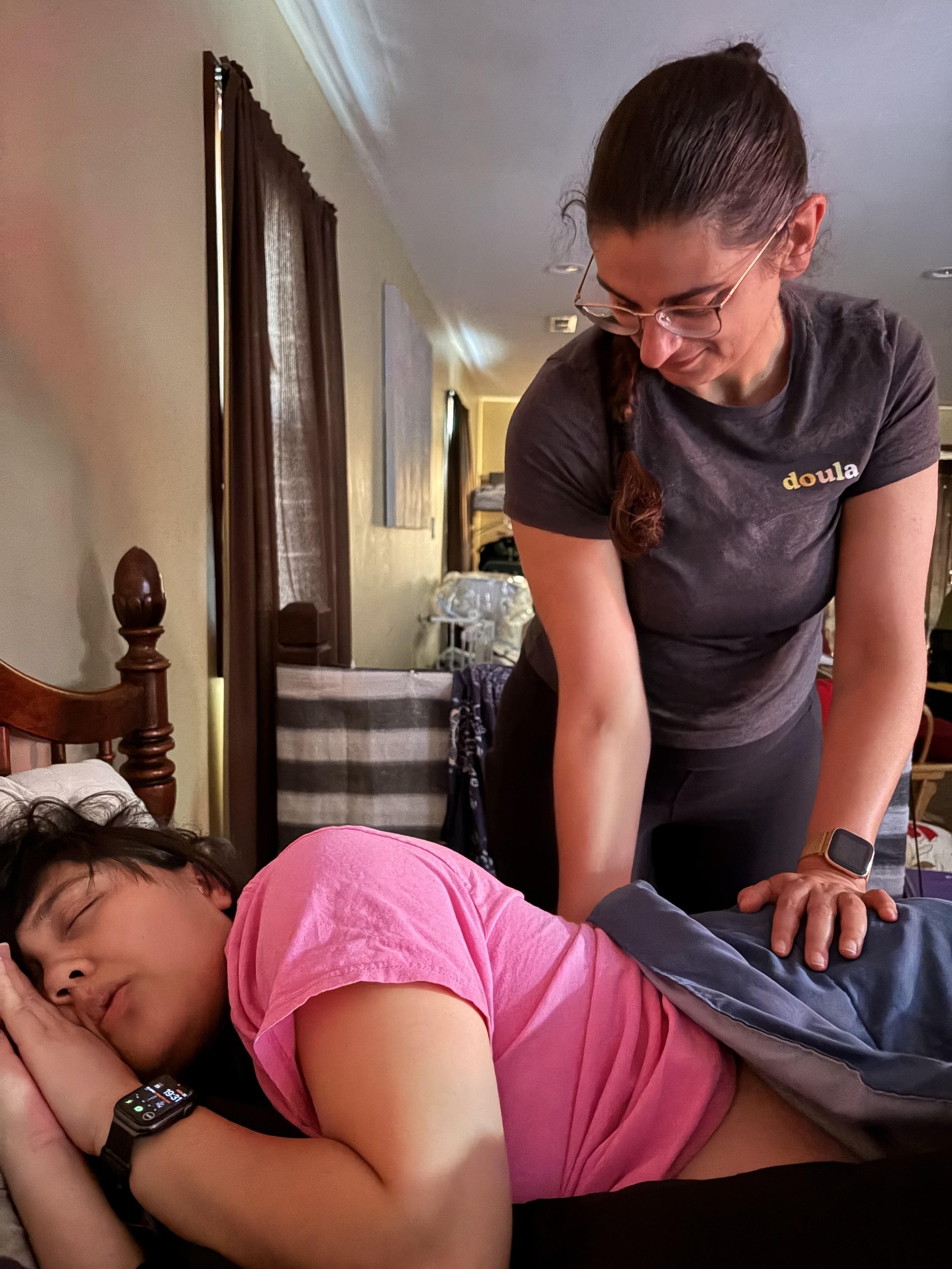
Rumor: Doulas provide care for the pregnant person only.
Reality: A phrase I repeat at almost every labor is: “At the end of this journey, you BOTH have to parent! I get to go home and sleep!” I see my job as a doula as caring for the family. That means I want both partners to be rested, nourished and hydrated, so that at the end of the childbirth journey, they are as ready as possible to parent! That means I’m reminding partners to eat and drink. I’m putting a chair under the partner so that they can whisper words of affirmation without straining their back. I’m bringing them coffee at 3am when I run down to that Prentice Dunkin’ (:D). This is the biggest day in the life of BOTH partners, so both need care and attention throughout the childbirth process.
The other reality is that childbirth is hard to witness! Especially when you aren’t familiar with the process. Watching the love of your life go through something so physically and emotionally intense can be really hard on the partner. I check in with partners when I see faces that feel worried, or shoulders up at the ears. I know who feels faint at the sight of blood, and who wants me to help them advocate to catch their baby when they’re born. I take pictures when the partner cuts the cord, so that special moment is remembered and honored. My job is to reassure, to explain, to guide through the process, so both the laboring parent and the partner feel safe, loved, respected, and centered throughout childbirth.
Rumor: The doula is the best person to advocate for a client in labor.
Reality: Advocacy is something that comes more naturally to some than others. While I do have skills in advocating for myself and other people in places of power (aka hospitals where a hierarchy certainly exists), so do partners! Advocacy comes up a lot when I’m interviewing families, especially families who have experienced negative interactions within healthcare settings. It also comes up a lot with people who know that they typically fall into a “people pleasing” or “rule following” identity. People understand that advocacy might become necessary in birth, but we’ve been conditioned to participate in the hospital hierarchy, to trust our healthcare providers blindly because they’re the ones who have been to school and done the training. While all this is true, I also believe that you are the only person who has lived in your body - you know it and are an expert too! All of this is to say, advocacy is absolutely a topic that comes up in interviews and prenatal visits because people have different comfort levels and lived experiences around advocating for themselves and their families.
How I deal with this is by teaching or reminding people of EBRAINS (see my acronym explanation in a blog post here). They have the questions that they can ask as choices and decisions are coming up in labor. We practice in prenatals asking those questions, and I’ll even have certain clients save a note in their phone with what EBRAINS is, so they have a cheat sheet ready to go. My hope is that the more they practice advocacy in pregnancy, the better prepared they are in childbirth. (And beyond! Once you have a baby, you’re that baby’s advocate for the rest of their life! It’s a skill you’ll need forever.)
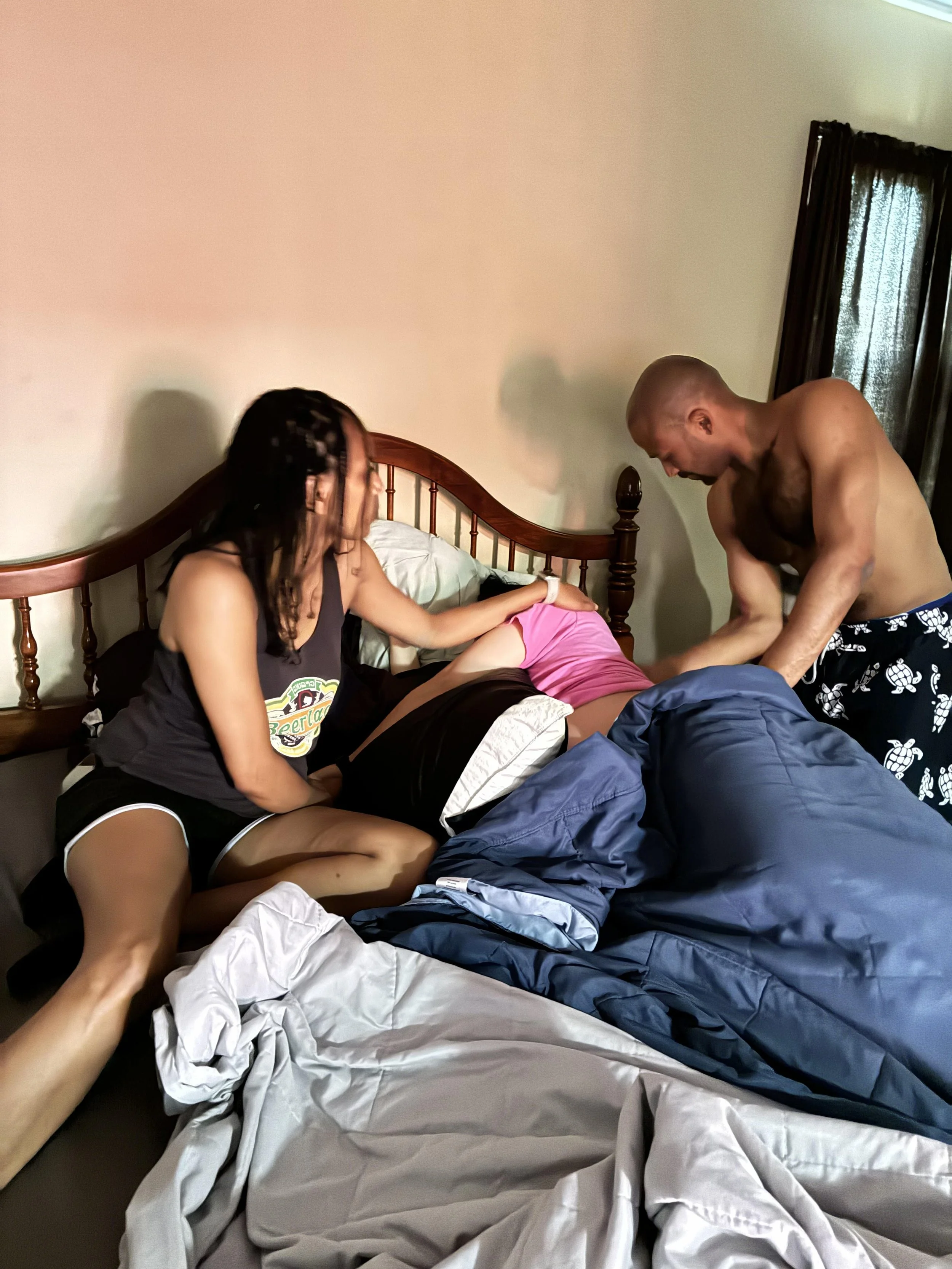
Once we’re in the room, advocacy may look like me just looking at the partner and saying, “Do you have any questions about what was just explained?” That question can usually spark people to take a moment, think, and then come up with a question to ask. Another way to center the partner in advocacy is my tried and true elbow trick: I may elbow a partner (with previously obtained consent!) as a quick reminder to ask a question. My final advocacy tool to center the partner and the family is asking for time. A simple, “Can the family have five minutes to talk amongst themselves?” can help give birthing people and their partners a minute to regroup together and check in. Sometimes I say for those check-ins, sometimes I step out.
At the end of the day, my job as an advocate is to help the family advocate for themselves. As a doula, I know that this will look different for each family I serve, so it’s my job prenatally to set everyone on the birth team up for advocacy success.
Interested in connecting about partner support? Want to chat all things advocacy? Or partner support? Connect with me here!